Showing posts with label San Diego Magazine. Show all posts

Tuesday, July 28, 2015

Eat Well Guide Helps San Diego Consumers Find Locally Grown Sustainable Food

Photo from GRACE Communications Foundation
Recently, San Diego Magazine writer Troy Johnson stirred up the proverbial hornet's nest with a story revealing the less-than-honest practices of restaurants that claim to serve meals made with locally grown, seasonal products. It's something he and I have discussed and that I've experienced as well. It's bound to make local diners skeptical that what's on the menu is really coming out of the kitchen. The farm-to-fable fraud he wrote about is, as he says, unfair to the reputable restaurants and other food vendors who are working so hard to do what they feel is the right thing in terms of sustainability, our health, and supporting local growers--not to mention the farmers and diners who are being cheated by the unscrupulous.

So I was intrigued when about this time I learned about the launch of a free new website that claims to be the largest curated directory of sustainable food vendors. The Eat Well Guide has some 25,000 listings of restaurants, farms, farmers' markets, and food co-ops across the country. It is produced and maintained by the GRACE Communications Foundation, whose mission, they state, is "to develop innovative strategies to increase public awareness of the critical environmental and public health issues created by our current food, water and energy systems, and to promote a more sustainable future." Originally created in 2003 to help people find animal products from sustainable guides, the guide has evolved and grown. Now the idea for the guide is to make it easy for consumers around the country to find sustainable food vendors for free.


There are eight listing categories: restaurants; farms; farmers markets; stores; beer, wine and cocktails; chefs, caterers, and meal delivery; bed and breakfasts; and organizations.

San Diego is one of the initial 18 cities included. To be listed in the Eat Well Guide, the organization says that vendors must demonstrate a commitment to supporting sustainable agriculture. According to GRACE Communications Foundation's Samantha Sanchez, the organization determines conformation to the standards through the vendor's website, "and if we aren't sure, then we make phone calls, find out about their purveyors, find out more about the chef, look for certifications, etc." And, she emphasized, vendors can't pay to play.

Basically, I think this is a great idea, but it doesn't quite feel like it's ready for primetime. For one thing, it's unclear how they've developed their initial list. Locals will scratch their heads at the inclusion of places like Trader Joe's (love them but local?). The website's info page explains that, "restaurants, markets, food co-ops and other businesses included in the Eat Well Guide demonstrate a sincere commitment to sourcing local, sustainably produced food." So, intent seems to factor high here. If you sell products that include organic ingredients, that may be enough, even if they aren't local or sustainable. As they say, "Our goal is to allow for a spectrum of sustainability, encouraging businesses to adopt increasingly sustainable food sourcing practices as they are able." I worry that that caveat allows for more skeptical consumers.


Another issue I have is that some of the vendors and organizations I found show up only in searches, including searches for other, non-related vendors. Currently, there are only 31 listings on the San Diego home page--all but two are restaurants; those other two fall under beer, wine, and cocktails. However, there appear to be many more local vendors and organizations in the database. For instance, The Wellington Steak and Martini Lounge is on the San Diego page, but not sister restaurant The Red Door--until you do a specific search for it. That search also pulled up vendors like Bread and Cie, Charlie's Best Bread, Trader Joe's, Eat Right Chef Service, and The Counter Burger, as well as Slow Food. Huh? I also did a search for the Little Italy Mercato and it, too, came up independently. The Hillcrest Farmer's Market showed up in another targeted search, but along with several other farmers markets (including one for Tierrasanta, which hasn't existed for years; I know because I live in the neighborhood), Whole Foods, and OB People's Market. Somehow the site hasn't swept them all into the San Diego page and clearly the search mechanism is a bit funky. Hopefully, that will be corrected soon. I also suggest those of us who are knowledgeable, are vendors, and are eager to help this become a more robust offering go on the site and suggest listings.

The listings themselves contain contact information and basics about the vendors and organizations, as well as a map, hours/days open, and other vendors close by--thanks to its incorporation of Google maps. So, as it matures it will be a handy guide for locals, as well as for travelers looking for places to eat that represent what's local and sustainable in the area.


Print Page

Tuesday, June 4, 2013

Stone Fruit Salsa

Back in the early 90s, KPBS aired a Saturday cooking show called Cooking at the Academy, referring to the California Cooking Academy. I guess I really enjoyed the show because I bought the cookbook, which I still have. This was one of those books many of us have that have a single recipe we fall in love with and work into our repertoire. Mine was a simple tomato relish made with a couple of juicy tomatoes, garlic, a jalapeño pepper, basil leaves sliced into a chiffonade, and balsamic vinegar. To that I came up with adding diced red onion.

Anyway, I discovered I adored it as an accompaniment to another favorite recipe from yet another cookbook, an eggplant souffle from the wonderful ancient tome, The Vegetarian Epicure. I still make both, although not always paired.

Fast forward decades and I found myself a couple of weeks ago at Specialty Produce marveling at the new delivery of stone fruit from the Santa Monica Farmers Market. I ended up writing a piece on four types of cherries for my Local Bounty post for San Diego Magazine, but I also had picked up some lovely peaches, plus I had a couple of plums already at home. What to do with this bounty?

And my mind somehow went to that tomato relish. So, how about a savory stone fruit salsa loosely modeled on that relish?

I had a serrano chile, basil growing in my garden, a lime and white balsamic vinegar from Temecula Olive Oil Company, which I thought would work better with fruit. Plus, a slew of cherries and other stone fruit.


But, how would this be used? Well, that was easy. All those flavors could go sort of AC/DC, complementing fish or carnitas tacos, grilled salmon, black cod, pork tenderloin, duck, or--what I had the first night--grilled flank steak. Or it could be served as a savory component in a dessert, over a rich vanilla ice cream, lemon cake, or even a decadent chocolate brownie.

Or a souffle.

Stone Fruit Salsa
(printable recipe)

Makes about 1 1/2 cups

2 dozen cherries, pitted
2 plums
1 large, firm peach
1/2 serrano or whole jalapeño pepper
1/4 medium red onion, diced
1 1/2 tablespoon white balsamic vinegar
juice of 1 lime
pinch of salt
freshly ground pepper to taste

Chop the fruit and the pepper (removing the seeds if you want to reduce the heat intensity). Add to a bowl with the rest of the ingredients. Mix well and refrigerate for an hour. Adjust the seasonings. If you want it sweeter, add a little honey to taste.

If you don't have a cherry pitter, find one. It might also be labeled an olive pitter. It's wonderfully handy.


Stone fruit salsa


Print Page

Wednesday, May 22, 2013

Whole Foods Hillcrest's New 7th Ave Pub

Last week, my friend Carolyn Kates invited me to come by the Whole Foods in Hillcrest, where she works, to learn about the program she created in which local producers make products exclusive to the Hillcrest store. I wrote about that for this week's Local Bounty blog post in San Diego Magazine. After checking out the products, she invited to have lunch with her in the store's new eatery, what they call the 7th Ave Pub--just a short stroll up the ramp to street level at University and 7th.


It's a cozy place with a contemporary feel, perfect for a beer and a burger. In fact, the pub carries 30 beers on draft, and several in bottles and cans--many, like Stone, Coronado Brewing Company, San Diego Brewing Co, Alesmith, and Ballast Point--from local brewers. There's also a small wine line list and some interesting non-alcoholic drinks, like the lemon ginger iced tea I ordered, which was remarkably refreshing.


The menu currently is a work in progress. Indeed, the 7th Ave Pub is a work in progress itself. The day I was there, a dumb waiter was being installed so that food didn't have to be carried up the ramp from the kitchen. Cooking equipment better suited for a restaurant than the market's prepared foods prep was on its way, which will give the cooks more latitude in creating a targeted menu for this particular venue.

Nevertheless, the food was terrific. Carolyn ordered a number of dishes for us.

The first that came up with Anishka's Beet Salad. Okay, I don't eat beets, but the salad was gorgeous and I was delighted that glistening red beets were limited to large slices on the plate, topped by the mix of arugula, grilled corn, and feta cheese--tossed in a tangy cilantro vinaigrette with sriracha sauce. I could enjoy just the salad and it was bright and perfect for that sunny spring afternoon.


Next up came a large serving plate filled with orange balsamic roasted Brussels sprouts, bedded in large red cabbage leaves. I adored these. You could just taste the citrus coming through the perfectly crispy sweet sprouts. But, get this, the Brussels sprouts were paired with a helping of whole grain mustard for dipping. That would never have occurred to me, yet it truly works and is something I'll be doing in the future when I make it myself. Loved this dish!


Then we were hit by a big--really big--burger. This was the University Burger & Fries. And there was the Pesto Tomato Flatbread.

The burger is served on a fluffy Sadie Rose bun. The top bun was laden with lettuce, tomato, a chunky slice of red onion, and what seemed to be a whole avocado, sliced. The bottom bun was invisible, covered by the medium rare whole beef patty (from Homegrown Meats), cheddar cheese, and two mammoth slices of crispy bacon. Decadent enough, but matched by the pile of crispy fries and a little bowl of Kickin' Ketchup (made in Orange County and sold at the store). The slice of pickle? Well, they can do better. Just open up a jar of Bubbies kosher pickles, please.

Okay, image trying to take the top bun and its toppers and flipping it over to create the burger. Then eating it. So delicious yet so fraught with danger. My suggestion? Sliders. Three types: beef, lamb, and pork. Perfect one-handed food for when you're also cradling an ale. And, I hear, they do intend to scale down some of the menu items to make them a little easier to eat. But, this still was a great burger.


The flatbread, also, was terrific. With a flatbread you obviously run the risk of juices above creating  soggy bread. But they know what they're doing here.


Those juicy tomato slices sat on a nest of house-made pesto and somehow their juices didn't leak through to the bread. The whole thing was smothered with mozzarella and parmesan cheeses--so it was a great melding of salty, sweet, aromatic, chewy, and crispy. (It even reheated well the next day when I ate the leftovers.)

The 7th Ave Pub clearly benefits from the variety of food and ingredients available to it from Whole Foods below, so you can also order sushi, a cheese board, tacos, soups, sandwiches, and dessert. There are vegetarian and vegan options for several dishes, too.

As I noted, though, the menu will be changing. That's something I can't wait to check out the next time I'm there.


Print Page

Tuesday, April 23, 2013

Gobbling Up Turkey Eggs

I was at the Thursday UTC farmers market a couple of weeks ago, talking with farmer Eli Hofshi of Eli's Farms about his produce for my Local Bounty blog on San Diego Magazine--then I noticed some unusual eggs sitting in cartons. They were beautiful, slightly larger than chicken eggs and splashed with brown speckles.


It turns out they were fertilized turkey eggs. Hofshi's turkeys have been prolific so far this spring and he has plenty to raise, so he has started bringing the rest out to the farmers markets to sell. Clearly, I had to try them. I've cooked with duck eggs and quail eggs, but these turkey eggs were a first for me.

Back in November, Slate writer Brian Palmer questioned why we don't eat turkey eggs. He posits very simply that it's because they're expensive. They just don't produce like little factories like chickens and require far more space than chickens. And they require more food. All fair points. Hofshi sold me the eggs at $1 apiece.

But, there was a time when turkey eggs were not only an American staple, but also popular in Europe. And, you can still find them for sale online and in some British markets. Here in the U.S., your best chance at finding them is at a local farmers market from farmers like Hofshi.


Now why would you want to spend the money to eat them? Mostly because they have a richer flavor than conventional chicken eggs and, thanks to their size, you don't need as many for a given recipe. But, they are higher in cholesterol than chicken eggs. So, they're kind of a treat--and certainly a conversation piece. Soft or hard boil them, poach them, fry them. Use them for sauces or baking. Or as I did--enjoy them simply scrambled.


You can find Eli's Farms at the UTC, El Cajon, City Heights, and Pt. Loma farmers markets run by Brian's Farmers Markets.


Print Page

Wednesday, November 14, 2012

Wee Be Little Soup for One


A couple of weeks ago, I wrote about a variety of pumpkins sold at Suzie's Farm booths at the local farmers markets in my Local Bounty blog on sandiegomagazine.com. Among the pumpkins I featured were petite Wee Be Littles, a lovely sugar pumpkin that can be chopped up and cooked or carefully emptied of the seeds and fibrous pulp and used as a container for everything from soup to salad to pudding.


In fact, Suzie's Farm employee Jenna Barnes gave me a wonderful quick soup idea for the Wee Be Littles that I included in the post. Then I took a couple home with the idea of making the soup--but it evolved from Jenna's very smart launching pad of a recipe into my own soup for one. I sauteed the vegetables and included a splash of Madeira. I used herbs from my garden, added some hot pepper flakes, and used gouda instead of cheddar cheese. The result was a rich, fragrant bowl of happiness. Easy to make and a splendid way to use the entire squash (and, yes, I always roast the seeds).

This is still Jenna's recipe, but it brings home the point that home cooks don't have to follow recipes to the letter, but instead should use them as a jumping off point to create a dish that reflects their own style of cooking.

So, with thanks to Jenna, here's my version of a Wee Be Little Soup:

Wee Be Little Soup for One
adapted from Jenna Barnes
(printable recipe here)
Serves, well, one

Ingredients
1 Wee Be Little pumpkin
1 large clove garlic, minced
1/4 large yellow onion, finely diced
1 tablespoon extra virgin olive oil (plus oil to rub over the pumpkin)
Splash of Madeira or other sherry
2 teaspoons minced herbs (I used thyme and marjoram, but sage is also good here) Keep about a 1/4 teaspoon reserved.
3 tablespoons grated cheese
Salt and pepper to taste
Dash of red pepper flakes
1/4 cup of milk (amount depends on size of the pumpkin)
1 pat of butter

1. Pre-heat oven to 350 degrees. Heat oil in a saute pan and add the onions and garlic. Slowly saute until golden. Add the Madeira and cook it down. Add the herbs and mix in well. Remove from heat and set aside.


2. Slice off the top of the pumpkin, just taking off about an inch or so and discard. Using a grapefruit knife, carefully clean out the seeds and the pulp (save the seeds to roast). Rub the pumpkin with the extra olive oil and place on a foil-covered baking sheet.


3. Add the onion and garlic mixture to the pumpkin, followed by the cheese, salt and pepper, and red pepper flakes. Add milk, leaving about half an inch of space from the top. Gently mix together, then top with the butter.


4. Bake for 30 minutes or until the pumpkin is soft on the inside.

5. Remove the pumpkin from the oven. Using a spoon, gently scrape the flesh from the sides of the pumpkin, taking care not to break through the skin. Stir all the ingredients together to create the soup. You're not pureeing the pumpkin so the soup will be a little chunky, but this adds some nice texture. Sprinkle the soup with the remaining herbs and/or roasted pumpkin seeds. Serve with warm crusty bread for dunking.


Print Page

Tuesday, January 3, 2012

A New Year's Resolution: Keeping the Anvil Over My Head

On New Year's Eve day, I bought my first pair of "skinny" pants, size M, and a black sleeveless cocktail-type dress, size 10. Now for many many women, this isn't anything worth mentioning (except to your girlfriends), let alone relevant to a food blog. But for me, it was huge (pardon the pun) because neither purchase is something I could ever have considered a year ago when I weighed well, well over 200 pounds.

Before: a chunky monkey in 2007. At least Shayna was happy.
But, last March the inevitable happened. I was diagnosed with Type 2 diabetes. Yes, I say inevitable because a couple of years before I was told I was pre-diabetic. Clearly I was in denial because I made barely an effort to lose the weight that could have prevented the full and permanent onset of what I call my disease of self-indulgence.

The diagnosis in March, however, changed my life. In some ways it was, perversely, the best thing that could have happened to me because I stopped living my life as a slothful eating machine and made a hard right turn. If I was to have a future that didn't include loss of my feet, my vision, kidney functions, or having a stroke or heart attack--all ghastly physiological problems associated with diabetes--I had to take very good care of myself.

By the time I met with my doctor later that month to discuss the diagnosis I had already joined Weight Watchers online and had just begun to take working out as a serious daily endeavor. I think I'd lost about six pounds at that point. By June, I'd lost over 20 pounds and the A1C blood test that measures diabetes fell from extremely bad to just above normal. Nine months into my new life I've lost 60 pounds. To my mind I still have another 30 or so to go. Late next month I have my next A1C test and I'm hoping to hit a normal number.

And that's what I have to focus on this year. Yet, while I'm so tickled to have those new pants, the little black dress, and the hope of good health, with success comes the risk of complacency. I told my friends and family back in March that I felt like I had an anvil hovering over my head and that's what kept me in line, not the promise of smaller sized clothes. But you can't live indefinitely under the threat of imminent danger. Once the perceived threat begins to fade, it's all too easy to regress incrementally into bad habits. That's what I'm fighting now. My immediate goal is not to be thin as a rail; that'll never happen. It is, however, to be at a very healthy weight that leads to a normal A1C result so that my doctor will wean me off the metformin I take three times a day. My long-term goal is to manage my disease of self-indulgence with self control. In other words, commit to a lifetime of good diet and daily intense exercise. This is no mere New Year's resolution.

So, I have to remember things. I have to remember the mortification of sitting in a nutrition class with other newly diagnosed diabetics and of mortification turning into disbelief as participants, also in clear denial, asked the nutritionist if they could still go to McDonald's, still eat their favorite chicken pot pie frozen dinner, still drink Cokes. I have to remember the guy I sat next to at a brunch cooking class I was covering for San Diego Magazine. He downed hefty portions of a croissant bread pudding and stuffed French toast and whatever else was served. I wasn't eating or drinking anything; there wasn't a thing there for me to eat that wasn't full of fat and carbo-loaded and besides I had to measure my blood sugar within the hour. It was a small group and the instructor wouldn't let it go so I finally blurted out in exasperation that I had diabetes and couldn't have the bread pudding, the French toast, or even the proferred glass of orange juice. The guy next to me looked at me like I was a nut case, shrugged, and said, "Oh, I have diabetes, too. I just take my meds and I'm fine. I can eat anything."

Well, let's see if he still has all his toes in a few years. I'm counting on having mine. I need to remember him.

Biology is apparently against me. On Dec. 28, The New York Times published a health story on weight loss called The Fat Trap. According to research, at this point my body is going to do everything it can to try to sabotage my efforts to get rid of that last 30 pounds and try to regain the 60 I've already lost; it will act like I'm starving. My workout won't have as much impact on burning calories. Ghrelin, dubbed "the hunger hormone," will increase while peptide YY, a hormone that suppresses hunger, will decrease. It's why so many people regain weight and why we need to rethink our condescending attitudes toward them. It's not a lack of will power. There are very real biological dynamics going on.

So, I need that hovering anvil swinging over my head if I'm to stay focused, get off the metformin, and wear that new little black dress a year from now or, what I'm actually planning, have it altered to at least a size smaller.

I'm asked a lot how I've managed to take off the weight, especially as a food writer who's always in pretty challenging settings for a diabetic working to shed pounds. The answer is simple--reduce fats, keep portions small, weigh myself regularly (usually twice a week), and exercise. A lot. And, because of the diabetes, I have to drastically limit my carb intake. I'm a fool for carbs but am only allowed 35 grams per meal. I use Weight Watchers online as a tool for tracking diet, weight, and exercise, but it doesn't always help because much of the food I eat--particularly when I go out--isn't easy to measure. So I have to rely on just tasting things or saying no thank you. I also am not shy about explaining this to the people I'm with, including chefs. That way they both know my limitations and back off insisting that I consume everything they set in front of me.

Finally, nothing gets in the way of daily exercise. Not rain or heat. Not clients. Certainly not malaise. In that sense, fear keeps me going. I truly get anxious when there's even the possibility that I can't get on the treadmill in the morning and will do what I have to--get up earlier, reschedule client conference calls, eat breakfast later, whatever--to make sure I get at least half an hour and usually 45 minutes in after a long walk with my dogs. Allowing myself to skip a workout could lead to complacence and I'm petrified that I could easily slip back into my natural sloth mode. I can't afford that.

This, of course, is the time of year for making resolutions, particularly when it comes to weight loss and exercise. So, here are some food-related lessons I've learned that might help you if this is your challenge:
  • Eat mindfully. Only eat what really tastes delicious to you. If you're going to eat pizza, it should be terrific, not crap. It's amazing how much food we consume indiscriminately that we really don't even much like. I found myself easily saying no to things once I got that in my head.
  • Stop eating once you just begin to feel full. I learned this lesson once I started having to prick my fingers three times daily to measure my blood sugar. If I overate--even so-called healthy foods--my blood sugar rose dramatically. I pay attention to how I feel when I'm eating and put down my fork once I just start feeling full. The side benefits are that it leaves me with leftovers and I sleep better now, too, as a result.
  • Enjoy small tastes of favorite foods if you truly can limit them to just small tastes. I can easily have just a small piece or bite of chocolate and I'm good. Same with ice cream. I enjoy sweets but they're not a weakness. A taste is all I need. However, I stay far away from potato chips and other salty/fatty/crispy treats. As the old Lays slogan goes, I can't eat just one. I'm an addict and they're my crack.
  • When you go out to eat, ask if the chef can make a dish for you that is aligned with your needs. Last spring I told chef/owner Matt Gordon of Urban Solace that I was having a hard time eating off his comfort food menu and he told me he'd just gotten some fresh trout--would I like grilled trout on a bed of greens and sliced apples? Why yes! Okay, sure he'd do that for a friend and food writer, but he made a point of telling me he'd do that for any customer and that most chefs should. He emphasized that chefs have the ingredients in the kitchen; there's no excuse for them not to help if the request is within reason. And, by the way, you have no idea how many food issues many chefs have. They get it. Just ask without being too demanding.
  • Look for naturally small portions of favorite foods. I'm so tickled when I can find a little five-ounce russet potato. That means I can enjoy a whole baked potato and for some reason psychologically that's important to me. I look for small chicken pieces, like thighs so I can eat the whole thing. I buy small apples and bananas for the same reason (carbs are carbs and most fruits are full of them so I have to limit my intake of them, too, not just pasta, breads, or sweets).
  • Try easing away from white rice and check out the brown versions. I have come to love the earthy flavors of brown basmati and brown jasmine rice. I also eat whole wheat pasta--but not much of it because even in limited amounts it still makes my blood sugar go up. 
  • Try out various whole grains as a pasta and rice substitute. I love farro, barley, millet, quinoa, and wheat berries. I use them for side dishes; I create salads with them. They have great flavors and textures--they just happen to also be healthy.
  • Vary your diet and experiment with new ingredients, new ethnic foods, new types of produce. Try new recipes and cooking techniques. Fennel bulbs, for instance, can be sliced into salad, but they're also delicious cut in half lengthwise, topped with olive oil and grated parmesan and then roasted.
There are so many truly delicious foods out there that are also healthy that I really don't find myself feeling too deprived most of the time. Yes, there are times I desperately yearn for pizza, tamales, a banh mi sandwich, or a big bowl of pasta but they pass. And I guess that's where the diabetes advantage, if there is one, comes into play. If I were just trying to lose weight to fit into clothes it would be easier to make excuses and indulge big. Knowing I have to measure my blood sugar, knowing that indulgence carries tremendous ramifications for my health, usually keeps me in line. And, when I do indulge, it's still pretty restrained--as in a big bowl of popcorn as opposed to a big bag of chips. Periodically I have a burger or something else I otherwise avoid, but it's infrequent. And many things I used to love--barbecued beef ribs, roasted turkey wings--I no longer have a taste for. (I have to admit to having had a minor meltdown at Trader Joe's in the beginning when, after reading nutrition labels, it looked like everything I loved was out of range for me, but I've since figured out how to shop there; they haven't missed me at all.) In short, I eat well and make the occasional accommodation. After all, this is for life.

The other thing I've learned in this process is that what works for me may not work for you. (And, vice versa; there are a lot of well-meaning people who offer me lots of unsolicited advice. Oh, and, for the record, diabetes doesn't go away; it can be managed without drugs, but it's a chronic disease. Once diagnosed, you always have it.) You should also always consult your doctor before following anyone's advice or suggestions--including the tips I just mentioned.

And--this is very important--nothing you or I say will change what someone else will do, just as no one ever changed my behavior (and, oh, did they try). I have a relative who is suffering from weight problems and another wants me to counsel that person. I said no. Clearly this person is aware of the excess weight and knows that it has to be dealt with. I grew up with well-meaning people trying to "enlighten" me. Having said their peace, they felt better but it would only cause me embarrassment and shame--and send me off to a Costco-size bag of Hawaiian-style potato chips. It would have the same effect on that relative to have me, uh, weigh in. When that person is ready to make a change and wants to talk, I'm there, anytime. But only then. The drive to do it has to come from within. That's the only thing that powers success.

So, on that note, I wish you all a happy and healthy New Year! I hope you wish me luck as I keep moving forward on this journey. And please share any favorite tips you have for leading a healthier life. We can all use them!

At Rancho La Puerta this past October. Much lighter, healthier, and clearly happier.


Print Page

Thursday, May 26, 2011

Create Your Own Food Truck Dishes

Early this spring I was on a cooking class blitz, scouting fun and unusual experiences to recommend to San Diegans for a just-published San Diego Magazine piece. Among my most favorite classes was the one I took from Chef Pam Schwartz of Sur La Table. America's Food Truck Cuisine introduced participants to four dishes from trucks around the country. It was a hands-on afternoon that yielded not just delicious tastings but a variety of new skills and ideas to transfer to home kitchens.


Schwartz, a CIA graduate who has worked at Nobu in Las Vegas and the Pamplemousse Grille in San Diego--and cooked at the James Beard House, led a group of about 15 students through Portland (KOi Fusion's Spicy Korean Pork Taco), Seattle (Skillet Street Food's Grass-Fed Beef Burger with Arugula, Cambozola and Bacon Jam), L.A. (the Border Grill Truck's Poblano Quesadillas), and New York (Street Sweets' "Macarella" Nutella Macaroons).

What I enjoyed about the class was not just the theme, although that's what drew me to it initially, but both the classroom set up (counter-high tables are outfitted with ingredients and tools around which four to five students work together) and the thorough and encouraging manner in which Schwartz and her team of helpers talk their students (including many culinary novices) through each recipe. They  demonstrated knife skills and walked around coaching individuals attempting to chop onions, mince garlic, seed avocados, and grill pork. And they offered tips for working with unfamiliar ingredients.

The Spicy Pork Taco was a delightful explosion of flavor--no surprise since the marinade itself has some 16 ingredients, including pear and kiwi juice, mirin, sesame oil, honey, Korean red bean paste, and rice wine. We made a tasty cabbage slaw with rice vinegar, lime juice, sesame oil, and sugar, grilled the marinated pork and then put all of it together in a corn tortilla, garnished with pico de gallo, bean sprouts, cucumber, cilantro, and kimchi.


From the taco we moved on to the burger. It's a simple dish, of course, but many in this class had never tried grass-fed beef and the herbaceous beef flavor was a revelation. It was also a great primer on how to effectively grill the lean meat so you keep the moisture intact. The best part, though, especially for one of my table partners, Alicia, was making the bacon jam. The many ingredients include applewood-smoked bacon, garlic, espresso, light brown sugar, apple cider vinegar, balsamic vinegar, cinnamon and cloves. It's pretty simple to make, too. Just cook the bacon and render the fat, remove the bacon pieces, saute onion and garlic, add the other ingredients and the bacon pieces, then cook gently for about 40 minutes until the jam is soft and brown.


While Alicia was busy at the stove, the rest of us were molding the sliders and prepping the rest of the components before they finally all came together between a sliced Hawaiian sweet bun.


Burgers done, we moved on to the quesadillas, which, though simple, had several components needing preparation--the flour tortillas, the chipotle salsa, the roasted poblano chiles, and the Border Guacamole. It was fascinating to watch the flour tortilla demonstration. I've made many a corn tortilla, but flour tortillas require a whole different skill set--more like making pie dough, which makes sense since you're also combining flour with fat and water.


Standing at a high-BTU stove grilling first the chiles and finally the quesadillas was an event for most of the participants. Everyone took a turn but also circled their tables working on slicing avocados, seeding and dicing jalapeños, and chopping cilantro or cooking up and pureeing the Chipotle Salsa (which I learned can be frozen for several months, as can individual chipotles left over from the can).


Finally, dessert. These delightful sandwich cookies are easy to make and if you don't love Nutella, fill them with jam (bacon jam?) or chocolate ganache. Here's the recipe:

Street Sweets' "Macarella" Nutella Macaroons
Yield: approximately 12 sandwich cookies

3 cups dessicated/unsweetened shredded coconut
1 cup granulated sugar
3 large egg whites
1 teaspoon pure vanilla extract
Nutella for filling the cookies

Preheat oven to 350 degrees and place a rack in the center. Place coconut, sugar, egg whites, and vanilla in a large mixing bowl. Stir thoroughly until the mixture reaches a soft and pliable consistency.

Line a rimmed baking sheet with parchment paper. Place 1 to 2 heaping tablespoons of the coconut mixture on cookie sheet and press into 3-inch circles about 1/8-inch thick. Continue making circles with the remaining dough to create an even number of dough rounds.

Place cookies in preheated oven and bake until edges are golden, about 10 minutes. Remove from oven and allow cookies to cool for 10 minutes.

Using a flat-metal spatula, remove cookies from baking pan and coat the bottom of half of the cookies with a generous amount of Nutella. Place another cookie, bottom side down, on the top of the Nutella on the coated cookies to make a sandwich. Continue making sandwiches until all the cookies are used.


Classes are taught at Sur La Tables across the country. In San Diego, Sur La Table is at the Forum at Carlsbad, 1915 Calle Barcelona Space #130. You can get their full schedule of classes on their website.

Print Page

Monday, January 10, 2011

Ode to the Crosne

Last week, after hearing too many references to celeriac and not ever having tried it, let alone seen it, I asked my friends at Specialty Produce if they carried the root. Sure enough they did and invited me to come by and pick some up to try. Which I did -- and will write about in another week or so. But, while I was there and reviewing recipes with their Kelly Orange, I noticed a reference to crosnes. Yet another mystery to me. Kelly sent me home with a bag of them as well. And I wrote about them in last week's Local Bounty blog, which I write for San Diego Magazine.


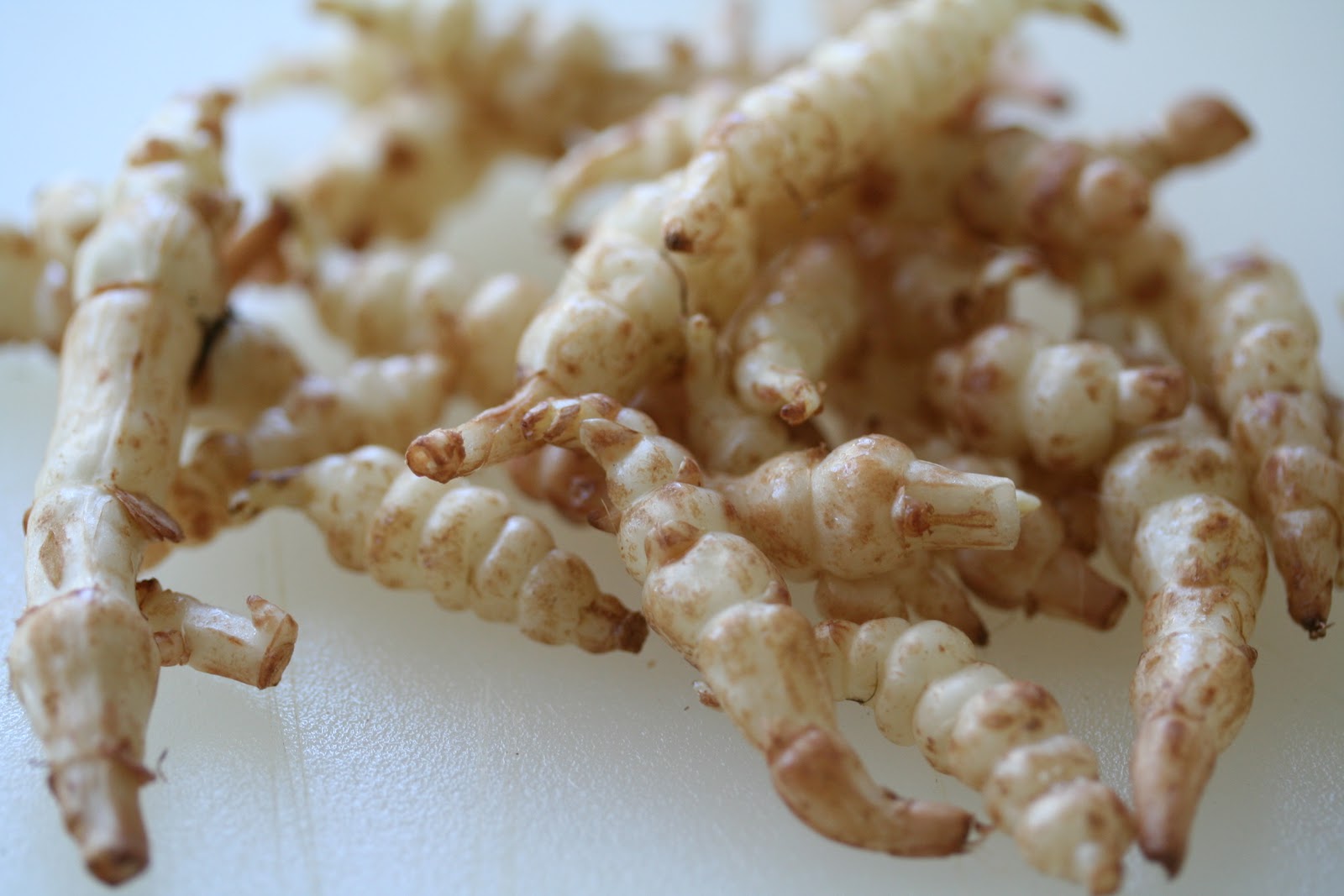
Take a look at these tubers. They're quite small -- perhaps up to three inches long at most. And, they aren't very appetizing looking -- really like little grubs. But don't let their looks put you off. They're crispy and have a lovely, delicate sweet and nutty flavor reminiscent of sunchokes.

Crosnes were introduced in the West in the 1880s by a French farmer and writer, who received them from an important collector of Chinese plants, a Dr. Bretschneider. A Frenchman named Palillieux loved the plant and started producing them. He gave the little tubers (officially Stachys affinis) the name of Crosne—his village. He did such a great job growing and marketing them that they became a hit across Europe. In England, they became known as Chinese artichoke—probably referencing Jerusalem artichokes, although they have nothing to do with Jerusalem or artichokes. It's the flavor they were likely capturing.

Locally, they're grown at in California at Weiser Family Farms, which is where Specialty Produce gets theirs.

So, what do you do with these little plants? The easiest preparation, which will also introduce you to their crunchy, slightly nutty flavor, is to saute them in garlic and either butter or a nutty oil, touched with just a little salt and pepper. However, they're irresistible pickled -- as a snack or for cocktails -- or marinated. I marinated mine yesterday and made a light salad, adapting a recipe I found in the wonderful reference book Vegetables from Amaranth to Zucchini by Elizabeth Schneider. 


Marinated Crosne, Carrot and Cherry Tomato Salad with Dill
Serves 4

3/4 pound of crosnes and baby carrots, ideally a mix of half and half
2 small scallions
1 jalapeno pepper, seeded and diced
4 tablespoons rice vinegar
1/2 teaspoon dried dill
3 tablespoons mirin (syrupy Japanese rice wine)
2 tablespoons canola oil
1 pint cherry tomatoes
Optional: fine-snipped fresh dill

1. Rinse crosnes, trim loose rootlets. Slice carrots in half.
2. Drop crosnes and carrots in a large pot of boiling, salted water. Return to boil and blanch for 1 minute. Drain and refresh in cold water to stop the cooking process. Drain and spread on a towel to dry and cool.
3. Cut apart light and dark parts of scallions. Mince the light part and add to a small bowl with rice vinegar, dried dill, and mirin. Blend, then drizzle in oil and whisk to emulsify.
4. Transfer the crosnes and carrots to the bowl and mix with the dressing. Chill for about three hours.
5. To serve, halve the tomatoes and thinly slice the green part of the scallions. You can place the crosnes and carrot mixture on a bed of lettuce or just on the plate. Add the tomatoes and sprinkle with the scallion greens and fresh dill.


Note that you don't need to peel the skin off the crosnes, although Schneider suggests rinsing them, putting them on a towel, sprinkling with coarse salt and rubbing the tubers with the salted towel to get the skin off. Me? I just rinsed them and left the skins on and they were fine.

Currently, the only place I know in San Diego that sells crosnes is Specialty Produce. If you've found them elsewhere, let me know.


Print Page

Tuesday, September 21, 2010

Fall Fest -- Finally -- and It's All About Spinach!

Spinach. You can saute it, turn it into a salad, a quiche, a souffle, or spanakopita. Add it to an omelet or frittata. Use it in lasagna or a pasta sauce or soup. It's one of my favorite greens but it can sometimes seem a little tame these days, compared to the sharp spiciness of arugula or strong stemmed kale. Nevertheless, it's completely utilitarian, delicious, and so ridiculously nutritious (we're talking high levels of vitamins A and C, along with iron and calcium) that it's a frequent player in my kitchen and, no doubt, in yours, too.

I just finished reading the uncorrected proofs of a new cookbook by Terra chef/owner Jeff Rossman. Called From Terra's Table, the book will be out in November and I've already written it up for my Local Bounty column in San Diego Magazine. I don't want to step on that but when I came across Jeff's recipe for Mixed Mushroom Ragout with Herb-Polenta Cake and saw that it includes Swiss chard in the polenta, I thought, "Bingo!" because I knew I could swap out the chard for spinach and have a very cool recipe for this week. And, Jeff gave me his blessing to do it for this. I made it last week, using beautiful crinkled Bloomsdale spinach that I found at Specialty Produce. One of the reasons I really love and recommend this Savoy variety is that it holds up well to cooking instead of immediately collapsing like flat leaf spinach.


Specialty Produce also had several kinds of exotic mushrooms so I pulled out a mix of gorgeous red lobster mushrooms, a very lively looking hand of oyster mushrooms, and little fresh shitakes.*


Between the mushrooms, the spinach, and the polenta, you have an earthy vegetarian dish rich in flavor. And, the recipe is pretty easy for a home cook -- so long as you have everything prepped before you start cooking. It also makes a lot of food. I halved the recipe and still had many portions of the polenta.

Mixed Mushroom Ragout with Herb-Polenta Cake
from From Terra's Table by Jeff Rossman
Serves 4 to 6
Total Time: 4 hours, Active: 1 1/2 hours

Herb-Polenta Cakes
1/2 cup olive oil
2 cups yellow onions, diced
2 cups assorted chard, cut into 2-inch pieces (I substituted spinach)
12 cups chicken or vegetable stock
4 cups polenta or yellow corn meal
1/4 cup fresh rosemary, chopped
1/4 cup fresh basil, chopped
1/4 cup scallions, sliced
1 cup freshly grated Asiago or Parmesan cheese
1 tablespoon kosher salt
1/2 tablespoon freshly ground black pepper

Mushroom Ragout
1/8 cup extra virgin olive oil or grapeseed oil
1 pound mixed mushrooms
1/2 pound leeks, washed and cut into 1/2-inch dice
1 teaspoon kosher salt
1/2 teaspoon freshly ground black pepper
1/4 cup white wine (any non-oaky kind that you would drink)
8 tablespoons unsalted butter

1. In a large pot, saute the onions and chard (or spinach) in the oil until tender. Add the stock and bring to a boil. Whisk in the cornmeal slowly to avoid lumps. Stir over medium-high heat. Add the remaining ingredients and cook until thick. You can serve this creamy polenta now or continue to make the cakes. Pour the mixture into a plastic-lined baking dish or loaf pan (Note: I just coated the pan with oil) and chill (at least 2 to 3 hours). When ready to serve, cut the polenta into discs or squares and reheat them on a hot griddle or in a saute pan. (Note: I poured some on a salad plate for dinner and the rest into an 8 X 8-inch pan--remember, I halved this recipe--and by the time I had made the ragout, it was about set).
2. For the ragout: in a saute pan over medium-high heat, add olive oil and stir in the mushrooms and leeks. (Note: lobster mushrooms are fairly hard in texture so if you use them, give them a head start in in the saute pan before adding the rest of the softer mushrooms.) Continue cooking until tender, about 2 minutes. Season with salt and pepper and add the white wine. Cook for another minute, until the wine burns off slightly. To finish the sauce, whisk in the butter and emulsify. Serve over the hot polenta cakes.


So, here's what are my Fall Fest colleagues are up to:

Todd and Diane at White on Rice Couple: Tuna and Spinach Bruschetta
Cate at Sweetnicks: Spinach Egg Breakfast Cup
Marilyn at Simmer Till Done: Spanakopita Scones
Alana at Eating from the Ground Up: Spicy Indian Lentil Soup with Spinach
Gilded Fork: Spicy Artichoke Spinach Dip, and a Dossier on Spinach
Nicole at Pinch My Salt: Spinach and Sausage Soup
Caroline at the Wright Recipes: Spinach Rotolo, a rolled ricotta and pasta extravaganza
Alison at Food2: Spinach Artichoke Dip
Michelle at Cooking Channel: Paneer With Spinach
Kirsten at FN Dish: Everyday Spinach Dishes with Giada
Liz at Healthy Eats: Mini Spinach-Mushroom Quiche
Food Network UK: Eggs florentine, brunch of champions
Margaret at A Way to Garden: Why I plant spinach late, and other tasty tidbits


Now It's Your Turn to Join Fall Fest 2010!
This collaborative effort won't be much fun without you! The more info we all give, the more we'll all enjoy fall's harvest. Have a recipe or tip that fits any of our weekly themes? You can contribute in various ways, big or small.
  • Contribute a whole post, or a comment—whatever you wish. It’s meant to be fun, viral, fluid. No pressure, just delicious. 
  • Simply leave your tip or recipe or favorite links in the comments below a Summer Fest post on my blog any upcoming Wednesday, and then go visit my collaborators and do the same.
The cross-blog event idea works best when you leave your recipe or favorite links (whether to your own blog or someone else’s) at all the host blogs. That way, they are likely to be seen by the widest audience. Everyone benefits, and then we're all cooking with some great ideas. Or go big: Publish entire posts of your own if you wish, and grab the big Fall Fest 2010 pumpkin badge above (illustrated by Matt of Mattbites). We'll also be tweeting using #fallfood as our hashtag. Here's the schedule:
Sept. 1: Sweet and Spicy Peppers
Sept. 8: Garlic
Sept. 15: White (or colorful “white”…but not sweet) Potatoes
Sept. 22: Spinach
Sept. 29: Apples
Oct. 6: Fall Salads
Oct. 13: Pumpkin and Winter Squash
Oct. 20: Pears
Oct. 27: “Mad Stash” (as in what you’re freezing/canning/drying, etc.)
Nov. 3: Root veggies
Nov. 10: Brassicas: incl. Brussels Sprouts, Cauliflower, Cabbage or other
Nov. 17: Sweet Potatoes
Nov. 24: Bounty to Be Grateful For
 *full disclosure: I do some research and editing for Specialty Produce

Print Page